- Search for hammerheads on current-swept sites in the Banda Sea
- Dive with hundreds of sea snakes of the very remote Manuk Island
- Schooling trevallies, snapper and surgeonfish at Serua Island
- Enjoy the excellent visibility afforded to Pantar Strait by consistent currents
- Find dramatic walls with soft coral gardens at Terbang Islands
Day 1:
Board the vessel, meet the crew and receive a welcome briefing. According to the sea situation, we may do a check dive after departure in the afternoon.
Days 2-9:
Ambon Island
Situated 7 miles off the southwestern coast of the island of Ceram, in the heart of the Moluccas, are the famous dive sites of Ambon, which will be our first stop. It offers world-class muck diving, diverse marine ecosystems and dramatic seascapes.
Pintu Kota This area boasts incredible underwater architecture, with a massive archway decorated with colorful soft corals hanging from its walls to ceilings. Many white and red polyps and red sea fans are dotted along the bottom, whilst shoals of fusiliers, bannerfish, and surgeonfish feed along the steep walls covered with huge barrel sponges. Twilight Zone This renowned muck diving spot in the harbour of Laha is great to explore at night or during the day. Amongst the detritus, countless species of nudibranchs, shrimps, crabs, and dwelling fish are waiting to be discovered. During your treasure hunt, you may come across flamboyant cuttlefish, ornate ghost pipefish, donald duck shrimps, tiger shrimps, starry octopus, and even rhinopias.
The Spice (Banda) Islands
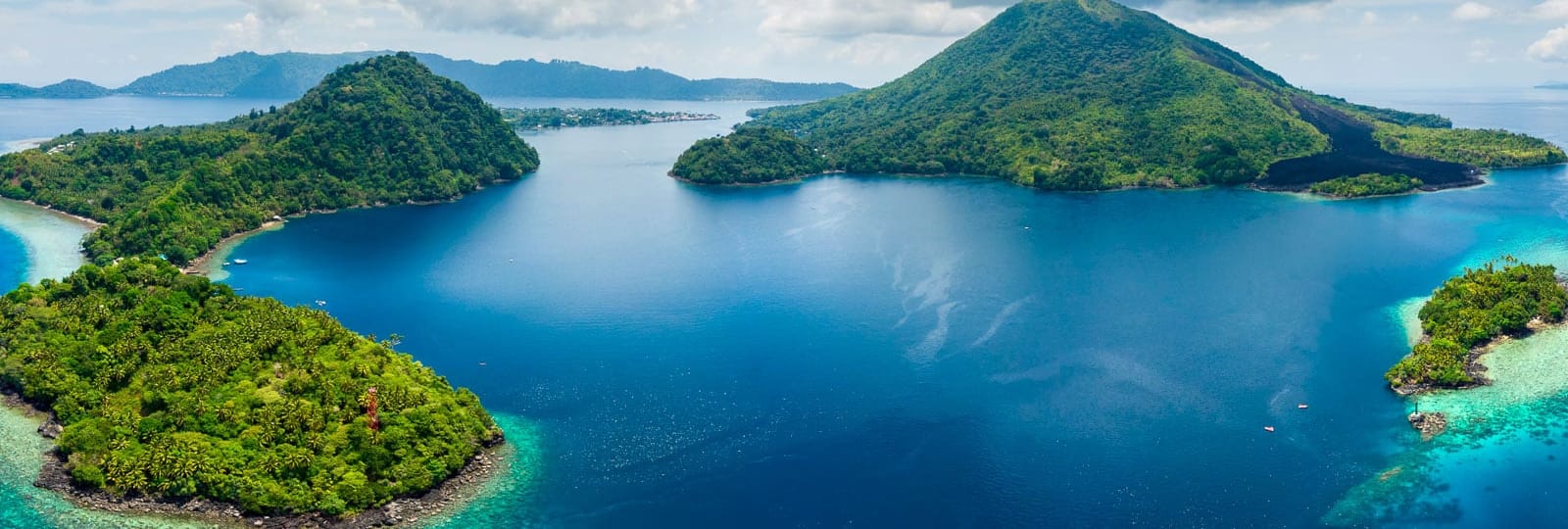
This group of islands boasts fantastic diving, with up to 40 meters of visibility. On land, from the top of Fort Belgica, built by the Dutch in 1611 and located in the historical town of Banda Neira, enjoy the view of Gunung Api, a 640-meter-high active volcano. Clove, nutmeg, mace, and cinnamon are still the main spices that are grown here.
Currents can be strong around these small islands in the north of the Banda Sea; therefore, sites will be chosen on the best daily conditions from the following options:
There are various dive sites that we may visit:
Karang Hatta A spectacular submerged reef south of Hatta, which offers steep slopes surrounded by deep waters. Masses of Redtooth Triggerfish, alongside fusiliers, napoleon wrasse and hawksbill turtles, populate this long reef. You might also get the chance to spot a few rare creatures like devil rays or even a scalloped hammerhead shark during your dive. Keep your fingers crossed before you enter this wonderful dive site.
Hatta Blue Hole This site is formed by a widespread hard coral shallow plateau, which extends away from the island to a majestic drop-off. A large opening on top of the reef opens to a swim-through densely covered with huge vibrant gorgonian fans. Also, massive barrel sponges inhabited by tiny hairy squat lobsters decorate the wall. Pohon Miring is Beautifully covered with colorful soft corals and gorgonian fans; a swim through will take you through to a sheer wall covered with leather corals. Numerous big napoleon wrasses inhabit the reef, and dogtooth tunas patrol the blue waters.
Batu Kapal: This island is named for its boat-like shape and is an exhilarating dive. The walls are decorated with vibrant yellow soft corals. Curtains of redtooth triggerfish, pyramid butterflyfish, fusiliers and surgeonfish merge into a multicolored fish soup.
On the rocky and sandy bottom, you can spot large groups of longnose emperor fish hunting alongside bluefin trevallies and opportunistic napoleon wrasses. Look in the blue for grey reef sharks, while blackfin barracudas hover above the reef.
Lava Flow In 1998, the volcano on Naira Island erupted, and the lava flow destroyed the jungle and reefs in its wake. While only a few trees have grown on the basaltic rock, underwater it’s a totally different story. From 3 meters to 40 meters, an extensive hard coral garden completely blankets the solidified lava flow.
Banda Jetty Famous for the mandarin fish that can be observed at sunset, which you can see just by looking from the jetty. In many places, these fishes are elusive, small and shy. Here, it's the opposite. Once they have done their mating business, a wide array of critters awaits to be discovered on the black sand, including colorful nudibranchs, octopus, cockatoo waspfish and frogfish.
Pulau Manuk
This tiny island in the middle of the Banda Sea offers a wide variety of dive topography, including walls, coral slopes and sandy areas. Famed as being a home to a multitude of sea snakes and where we can witness the snakes hunting together. Larger fish pass by on the outer walls, including tunas and jacks and smaller creatures can be found amidst the pristine corals
Nil Desperandum & Serua
Upwelling and currents around these islands bring the nutrient-rich waters, and with them an abundance of marine life. We see many larger fish species in these little-visited waters.
Hammerhead sharks, tuna, napoleon wrasse and grouper are amongst the most common sightings. Schooling surgeonfish, bannerfish, and barracuda give divers a spectacular display.
We usually schedule three dives to explore these rich reefs before moving northwards to Manuk.
Terbang Islands
The islands of Terbang offer unspoiled reefs for a great diving experience. At Terbang we find dramatic walls with soft coral reef top gardens and plenty of bumphead parrotfish and schooling reef fish
Gunung Api Island
Famous for its high population of sea snakes, this volcanic island rises up from the depth of the Banda Sea and offers dramatic seascapes with steep soft coral-encrusted walls and huge barrel sponges. This oasis of life attracts large pelagics such as dogtooth tunas and rainbow runners and also look out for scalloped hammerhead sharks or silvertip sharks cruising the deep waters
Wetar and Reong Islands
We will make 3 dives here and spend the day exploring a variety of sites that the islands offer. The walls are covered with huge sponges and soft corals. Drop-offs and colorful reefs with healthy marine life, including sightings of eagle rays and turtles. However, currents can be fairly robust, particularly in the channel between Reong & Wetar; therefore, divers are advised to carry reef hooks and stay within close range of their buddy and/or the dive guide.
Pantar Strait
The Pantar Strait is known for both critter diving and stunning reef walls where larger pelagic species can be spotted. Some stronger currents are to be expected, but the currents bring the nutrients that feed the reef and the inhabitants of the strait. There are a variety of dive sites here, and we chose the optimum sites based on the conditions of the day.
The French Man’s Window. A wall dive site in front of Alor’s Divers Resort covered in a fantastic array of soft corals. Look closely to find a wide variety of nudibranchs; remember to watch in the blue as well, as something big might swim past.
Pak Yan’s Village An excellent muck diving spot to find Pegasus sea moths, dragonets, scorpion fish, ghost pipefish and bargibanti seahorses too.
Clown Valley. Hundreds, if not thousands, of anemones cover the shallow reef slope on the south side of Pulau Pura, all hosting the Clark's anemonefish. A stunning site, but thermoclines can be expected, so be prepared for some chilly water that may attract thresher sharks.
Located at Pulau Reta, The Arch is famous for its overhangs and fissures providing stunning topography, as well as a home to schooling fusiliers and colorful anthias. Larger pelagic fish, including blacktip reef sharks, have been spotted here too.
Mucky Mosque: An iconic muck dive at the entrance of Kalabahi Bay where the attentive eye can find paddle flap & frondosa’s rhinopias, as well as ornate, robust and even halimeda and velvet ghost pipefish, frogfish, bobtail squid, and long-arm octopus and for the lucky ones, wunderpus.
Day 10:
Check out from the boat and be transported to the airport for a domestic flight back or to a local hotel if you are extending your stay.
Sample itineraries are for guidance only. Actual itineraries may differ slightly due to factors such as weather, wildlife, logistics and local regulations.