
Mari Itinerary
Raja Ampat Ultimate12 days / 11 nights
About Mari
- Spacious vessel accommodating non-divers and families
- Flexible cabin configurations with doubles, twins and bunks
- Up to four dives a day in Indonesia’s top destinations
- Enjoy al fresco dining set to panoramic views of the scenery
Crafted by master boat-builders from Sulawesi, Mari liveaboard offers safe, comfortable, and exciting dive safari voyages throughout the Indonesian Archipelago – including remote regions like Raja Ampat, Cenderawasih Bay, Banda Sea and Triton Bay. With low guest numbers, modest yet contemporary communal areas, and a range of itineraries and destinations, Mari’s remarkable liveaboard adventures represent incredible value for money.
Itinerary details
Length of trip 12 days / 11 nights
Number of dives Up to 33
Experience Open Water - Minimum 30 dives
Insurance Required
Highlights
- Departing and returning to Sorong, this itinerary visits the must-see dive sites of Central Raja Ampat
- Encounter both reef and oceanic manta rays at renowned Raja Ampat dive sites
- Visit unspoiled hard and soft coral gardens
- Dive the well known and action-packed Dampier Strait
- Search for Pontoh's pygmy seahorse at Mioskon
- Cruise through lagoons in Penemu
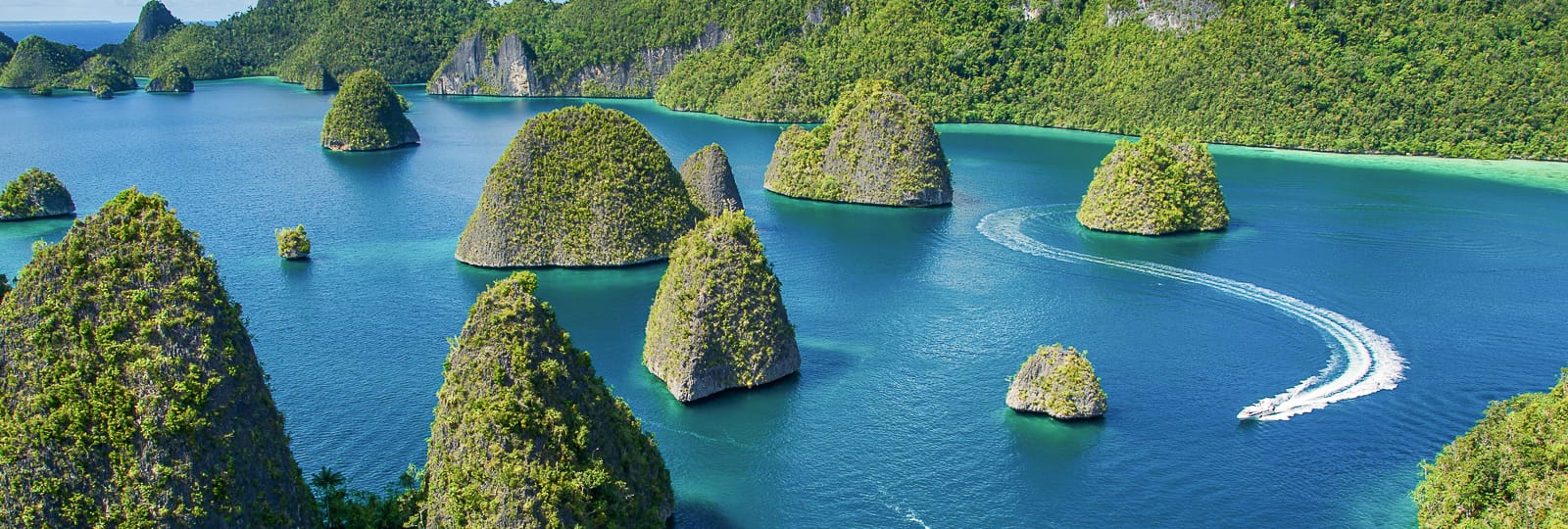
- Land visit to the lookout point on Piaynemo for that classic Raja Ampat photo
- Night dive is included in the schedule
Day 1: Your flight will arrive in Sorong, a coastal city in the eastern Indonesian province of West Papua. Sorong is the gateway to Indonesia's Raja Ampat Islands.
Day 2-10: If possible, we offer 3-4 dives daily. When crossing, only 1-2 dives a day can be scheduled. Some of the destinations:
Sorong: a coastal city in the eastern Indonesian province of West Papua. Its only land borders are with Sorong Regency. It is the gateway to Indonesia's Raja Ampat Islands, species-rich Coral reef islands in an area considered the heart of the world's coral reef biodiversity. It also is the logistics hub for Indonesia's thriving eastern oil and gas frontier. Sorong has experienced exponential growth since 2010.
Dampier Strait: Physically, the Strait is the large passage of water between the islands of Gam & Waigeo in the north and Batanta in the south, which takes its name from the English explorer-adventurer William Dampier, who first charted the area in the 17th century. The Strait is the principal channel through which the nutrient-rich waters of the Indonesian Throughflow pass on their way south to the deep basins of the Banda Sea. What that physically means is that the huge volume of water that is heading south through the Strait is forced into a smaller area, and when that happens, there is only one possible result—the water flows much faster, producing possible strong currents that the Dampier Strait is known for.
Mioskon: This small island is located on the northern side of the Dampier Strait. A superb site with numerous bommies densely coated in soft corals. The island is oval-shaped and rises from the surrounding sandy seabed plateau at 20-25 m, and its southeast tip faces into the predominant current that flows through the Strait. On the shallow plateau reef is a good chance to spot large wobbegong sharks.
Mansuar & Kri Island: This site is where a world record fish count was made on the house reef. 284 species were recorded on a single tank dive of 60 minutes by Australian Dr. Gerry Allen. There are numerous reefs here where not only is the diversity evident, but also the quantities are surprising. Sharks are seen on most dives, a rarity in Indonesia. Kri Island in Raja Ampat is where the fish are to be found. Diving at these sites is a sensational and very rewarding experience!
Fam Islands/Penemu: These islands are the very definition of paradise. White limestone cliffs plunge into the sea. Ultramarine blue lagoons are nestled next to monumental pinnacles and untouched beaches. Many places claim to be this beautiful, but this is a genuine article. Fam Island has some of the most beautiful coral gardens and walls in Raja Ampat, combined with stunning viewpoints on land. With a little luck, we can see the walking shark here. Yes, you can read it right now. The incredible epaulette shark is not only a perfect swimmer, but it can also "walk" between coral heads at low tide, along the seafloor, and even on land when needed. For that reason, it is often called the "walking shark." Piaynemo is the correct local spelling of the name of the island marked on most maps of Raja Ampat as “Penemu.” Penemu is about 60km (~40 miles) west of Waisai and has a karst island seascape almost indistinguishable from that of Wayag.
Arborek Island: The island, which gets its name from a type of fruit that grows on it, is located at the western end of the Strait where it enters the Halmahera Sea. It is a long, thin island that runs east to west, with a large fringing reef, and it sits right in the path of the Dampier Straits currents, which split around the island at its eastern point and flow strongly around its sides. On the northern side of the island are two quite large wooden jetties just in front of the small village, and the rich waters of the Strait swirl around them, creating a mini-ecosystem on the wooden structures. Rich patches of vibrant soft corals have grown on the vertical piles of the jetty, and resident schools of jacks and batfish patrol in between.
Day 11: Final day of diving - our trip ends at Sorong.
Day 12: Check out after breakfast or lunch, depending on your return flight time. We say goodbye to our guests and wish them farewell. The MARI crew will organize the transfer to the Airport and assist at check-in for onward flights.
Sample itineraries are for guidance only. Actual itineraries may differ slightly due to factors such as weather, wildlife, logistics, and local regulations.
Transfer details
Departure
02:00pm
Sorong
Sorong Airport: SOQ
Return
08:00am
Sorong
Sorong Airport: SOQ
Current availability and prices: https://www.zubludiving.com/itineraries/mari/itn-2406210624101-raja-ampat-ultimate