- See two large boats discarded during WWII at Bachas Beach
- Witness the unparalleled biodiversity that inspired Charles Darwin
- A "lunar landscape" of barren lava fields at Sullivan Bay
- See land iguanas and possibly giant tortoises at Urbina Bay
- Find Galápagos flamingos and pin-tail ducks at Espumilla Beach
- Meet the flightless cormorant at Espinoza Point
- Visit Mosquera, home to the largest concentration of sea lions
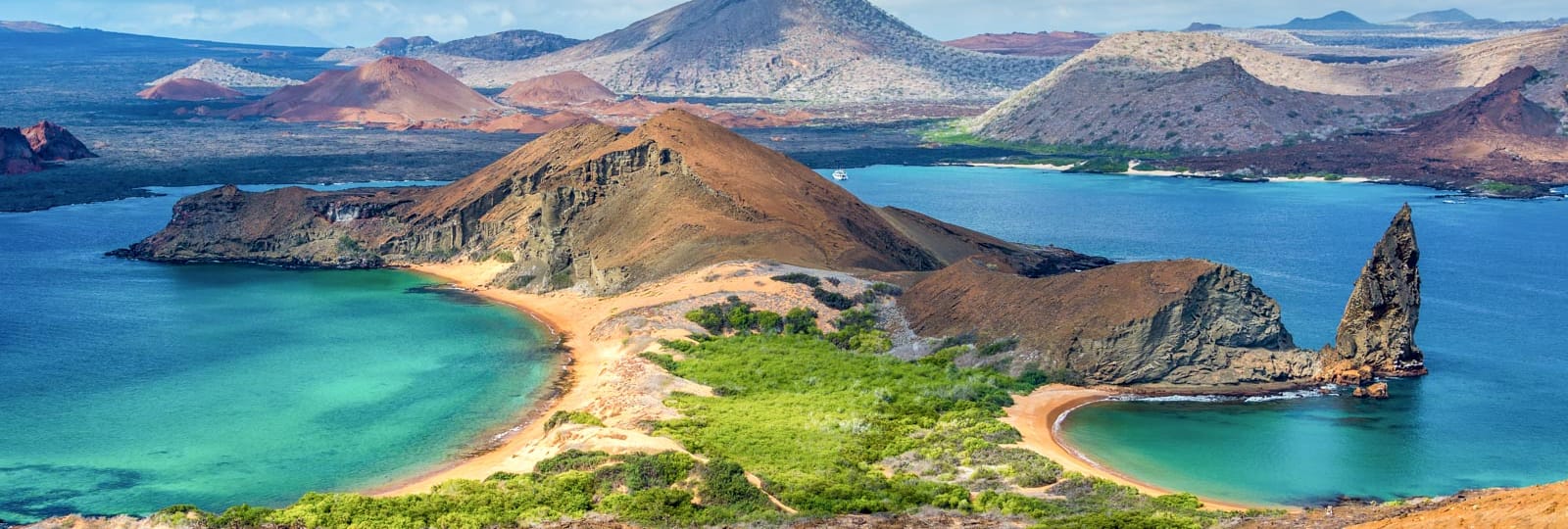
- Rabida Island is unique because of the red color of the rocks and sand
Day 1: Baltra Airport - Santa Cruz Island - Bachas Beach
Upon arrival, reception and assistance at the airport, and transfer from Baltra Airport to the M/C Endemic. In the afternoon, visit to Las Bachas, which is a beautiful white-sand beach located on the northern coast of Santa Cruz Island. There you can go for a stroll or do some easy snorkeling in the gentle surf of Sithe. Sea turtles lay their eggs at the edge of the vegetation. You can also look for a rusted pontoon, a relic of the Second World War. In fact, “bachas” is a poor pronunciation of “barges,” two of which were wrecked offshore at that time: the locals mispronounced the name, and it stuck
Day 2: Genovesa Island - Darwin Bay - El Barranco (Prince Philip’s Steps)
In the morning, visit Darwin Bay, which is the only sandy beach found in the caldera on Genovesa. Colonies of the Great Frigate are found along the beach. Males exhibit their red balloon pouch to females for hope of a match. Red-footed boobies nest in the trees in contrast to the other two booby species, which do so on the ground.
In the afternoon, you will go to El Barranco (Prince Philip’s Steps), a staircase carved out of stone. This will lead you to a wide plateau, where you can observe large colonies of masked boobies, frigate birds, storm petrels, and ducks. During this easy stroll you will cross a small Scalesia forest, the habitat of the short-eared owl. The same path will lead you back to your boat.
Day 3: Santa Cruz Island - Highlands - Santiago Island - Sullivan Bay
On the highlands of Santa Cruz, you’ll have the opportunity to see the famous giant tortoises in the wild. So renowned are these endemic animals that they gave the archipelago its name. Birdwatching is also one of the activities done in the Santa Cruz highlands, since this area is home to finches and other Galapagos birds. In the afternoon, you will visit Sullivan Bay, located on the east coast of Santiago Island. We land on a white coral sand beach and begin our walk over lava that flowed less than 100 years ago. This is the perfect place to see and feel the volcanic origin of the Galapagos. Also in this area you will admire flora that grows in lava fields.
Day 4: Isabela Island—Tintoreras/Sierra Negra Volcan—Breeding Center
Isabela Island is the largest of the archipelago, with a surface of 4,588 square kilometers. It encompasses more than half of the total land area of Galapagos. Las Tintoreras is a group of small islets off the coast of Isabela Island, known for their striking dark lava formations that create a distinctive habitat for diverse wildlife. This makes it an excellent spot for water activities such as dinghy rides and walking. Visitors often get the chance to see turtles, sharks, penguins, and sea lions up close. Sierra Negra is among the most active volcanoes in the Galapagos and boasts the world’s second-largest caldera. Hiking to the top takes you through guava tree forests, and on a clear day, you’ll be rewarded with breathtaking views of the island’s five other volcanoes.
After lunch, visit the Arnaldo Tupiza Breeding Center of Isabela; infant and juvenile giant tortoises can be seen until they are ready to be released and survive in the wild. On the way back to the yacht, be ready to spot flamingos and other water birds
Day 5: Isabela Island—Elizabeth Bay—Urbina Bay
In the morning, you will discover Elizabeth Bay, which is a marine visitor site. The excursion is carried out in a Zodiac, and so there is no landing point. Your zodiac ride starts with a visit to the Marielas islets, where there is the largest and most important penguin colony in the Galapagos Islands. The excursion continues into the cove that is surrounded by red mangroves, where you can spot sea turtles, flightless cormorants, spotted eagle rays, golden rays, brown pelicans, and sea lions.
In the afternoon, Urbina Bay will be visited. Here you can see coral formations and large colored land iguanas. The possibility of seeing giant turtles, flightless cormorants, blue-footed boobies, penguins, and marine iguanas is excellent.
Day 6: Isabela Island - Tagus Cove, Fernandina Island - Espinoza Point
After breakfast, Tagus Cove will be the first attraction to see. A ride along the cliffs in a Zodiac will give visitors a good chance to see the Galapagos penguin, the flightless cormorant, and other sea birds. From the landing dock it is about a 30-minute hike along the trail up to the top of the cliff from where you can view Darwin Lake, a saline lake saltier than the sea. You can also see several volcanoes from this location. After lunch, Espinoza Point will be visited, which is one of Fernandina’s visit points. Located within a fascinating lava scenery with lava cactuses. On the surface of the lava, mangroves thrive. The highlights are sea lions, penguins, the flightless cormorant (especially in spring and summer), and one of the biggest iguana colonies of Galapagos.
Day 7: Santiago Island - Buccaneer Cove/Espumilla Beach - Rabida Island
In the morning, you will have the opportunity to discover the Buccaneer Cove that is located just north of James Bay. It was known as a safe haven in the 17th and 18th centuries for pirates to stash their loot, take on fresh water, and capture tortoises for food. It is a nice place for a zodiac ride, snorkeling, and kayaking. Blue-footed, Nazca boobies, fur seals, and Galapagos hawks can be seen flying overhead. Or a visit to Espumilla Beach will take place. It is a pristine sandy beach and a popular place for marine iguanas and Sally Lightfoot crabs. The crabs attract the hunting herons, performing the dance of predator and prey. With an abundance of marine life, including octopi, moray eel, and sharks, snorkeling is recommended and available.
In the afternoon, you will be taken to Rabida Island. Its main attraction is the red sand beach, famous for its cactus groves and rock formation scenery, aside from the vegetation of the arid zone and the presence of native and endemic species. During the walk on the red sand beach, you will see brown pelican nests and a lagoon where flamingos are seen from time to time.
Day 8: Mosquera Islet - Baltra Airport
In the morning, visit Mosquera, a small islet found between Baltra & North Seymour Islands. Lava gulls, sea lions, and Sally light-foot crabs inhabit this sandbank with an extension of over 600 meters. It also hosts the largest populations of sea lions and orca whales that can be seen occasionally depending on the season you visit the islet.
After this last visit, transfer to Baltra Airport for your return flight to mainland Ecuador. Assistance and farewell at the airport.
Sample itineraries are for guidance only. Actual itineraries may differ slightly due to factors such as weather, wildlife, logistics, and local regulations.