
Coralia Itinerary
Cenderawasih Bay (MKW - SOQ) 12N13 days / 12 nights
About Coralia
- Experience first-class service with a 1:1 staff to diver ratio
- Tailored routes offering the best possible diving across Indonesia
- Committed to sustainability, scientific research and reef restoration
- Amazing activities for all guests, including kayaking, hiking and spa
Coralia liveaboard is an eco-friendly phinisi offering flexible multi-day trips exploring Raja Ampat, Alor, Komodo, Banda Sea, and more. This brand new liveaboard already has a reputation for delivering high-standards of personalised service with a 1:1 staff to diver ratio and incredible resort-like facilities.
Itinerary details
Length of trip 13 days / 12 nights
Number of dives 26 - 33
Experience Open Water - Minimum 5 dives
Insurance Required
Highlights
- One-way trip exploring the secrets of Cenderawasih Bay
- Explore ghostly remains of WWII shipwrecks around Manokwari and Biak
- Dive the wrecks of Japanese freighter and a former coastal patrol boat
- Search for Denise's pygmy seahorses in Roon
- Tanjung Mangguar is situated at the northeastern tip of the Napen Peninsula, within Cenderawasih Bay
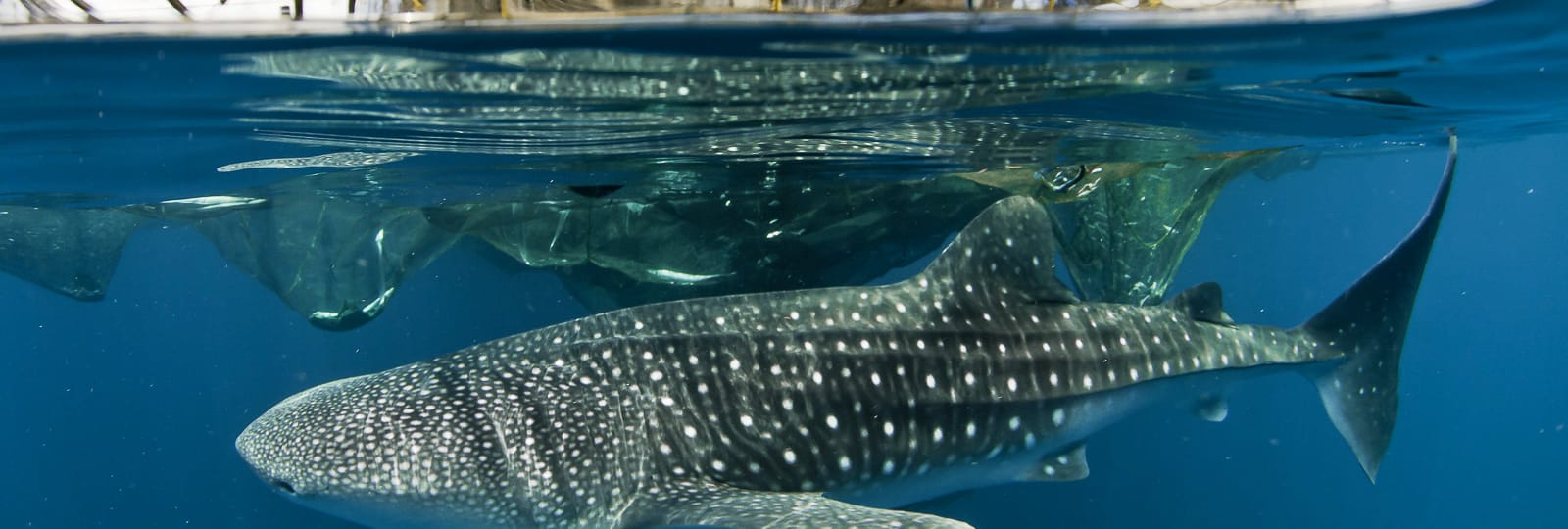
- Swim with Cenderawasih Bay’s famous whale sharks at Kwatisore Bay
- Night dive included in the schedule
Day 1:
On embarking day, you will be greeted by the Coralia team and get time to settle in, prepare your gear and relax from your travels. Coralia cruise directors will also give you an orientation about the amenities on board, the safety features and procedures, and the cruise itinerary. Typically, we use the afternoon and night to make our way to the first dive destination. So the first dive will be the next morning.
Days 2-12:
At the other sites you can see schooling fish, especially fusiliers, barracuda and another endemic fish, this time in the damselfish family Chrysiptera pricei. Reef sharks can also be seen cruising the shallow hard coral reefs.
Roon is our next stop. There are ridges lined with hard corals and sloping walls with sea fans and colourful soft corals. Divers can look for bumphead parrotfish, reef sharks, schools of fusiliers and turtles. There is even a small waterfall on the beach that flows into the sea.
Close to Roon is Pulau Rippon. There is a wreck of a World War II plane with the rest of the dive site forming a slope with pretty corals. At another spot the white sandy bottom rises up into stunning coral patches covered with soft corals and elephant ear sponges. There are turtles, schools of surgeonfish and barracuda, alongside some interesting macro subjects. Yet another endemic fish can be seen around Pulau Rippon. A dottyback Pictichromis caitlinae can be found in cracks and crevices.
Tanjung Mangguar has one of the most beautiful dives in Cenderawasih Bay. The site is completely covered in soft coral and attracts a lot of fish life. A school of barracuda hangs out here, along with trevally, fusiliers and surgeonfish. Look out into the blue for possible sightings of manta rays, mobula rays and sharks. The shallows here are also impressive. There is a good night here too.
Next we will go to Kwatisore Bay for the chance to see whale sharks. The whale sharks come to feed at the bagans (fishing platforms) here. This is a natural behavior; the whale sharks have learned that if they suck on the fishing nets, the fishermen’s catch comes out of the holes! The fishermen believe these huge fish bring them good luck. They throw handfuls of fish to the whale sharks to keep them close to their bagan.
We will arrive in the area in the late afternoon to ask the fishermen who have seen whale sharks that day. We can then arrange to visit early the next morning. If we get lucky, we might see more than one whale shark, and they have been known to stay with us for hours! Having close-up encounters as the whale sharks circle round and round, opening their mouths wide and sucking in the fish, is one of the most incredible experiences you can have.
On the way back up to Manokwari, we will spend some time at the Tridacna Atoll. There are several dive sites in this area. Here we dive at deep drop-offs and fringing reefs carpeted in soft corals, large barrel sponges, sea whips and massive elephant ear sponges. The surrounding deep ocean means that the dive sites here are some of the most fishy in the Bay.
We will stop close to Manokwari on the way out of the Bay. During World War II Manokwari was occupied by the Japanese, and there are some excellent wrecks that we can explore here. There is a huge Japanese freighter and a former coastal patrol boat that are now encrusted in corals and home to lots of marine life. After two dives we will cruise overnight to the next spot.
On the way back to Sorong we stop at The Junkyard. This dive site is on the south corner of Pulau Amsterdam. Here small boats and barges were scuttled, and they have now turned into a nice artificial reef. We will do two dives here before cruising overnight to Sorong and enjoy our goodbye dinner while underway.
Day 13:
On disembarkation day, the Coralia team will equally assist you from Coralia to the airport.
Sample itineraries are for guidance only. Actual itineraries may differ slightly due to factors such as weather, wildlife, logistics, and local regulations.
Transfer details
Departure
02:00pm
Manokwari
Rendani Airport: MKW
Return
10:00am
Sorong
Sorong Airport: SOQ
Current availability and prices: https://www.zubludiving.com/itineraries/coralia/itn-2606090322571-cenderawasih-bay-mkw-soq-12n